

Categories
Market Trends & DataPublished June 8, 2026
What the HOME Act Means for Austin Lot Sizes and ADUs (2026 Guide)

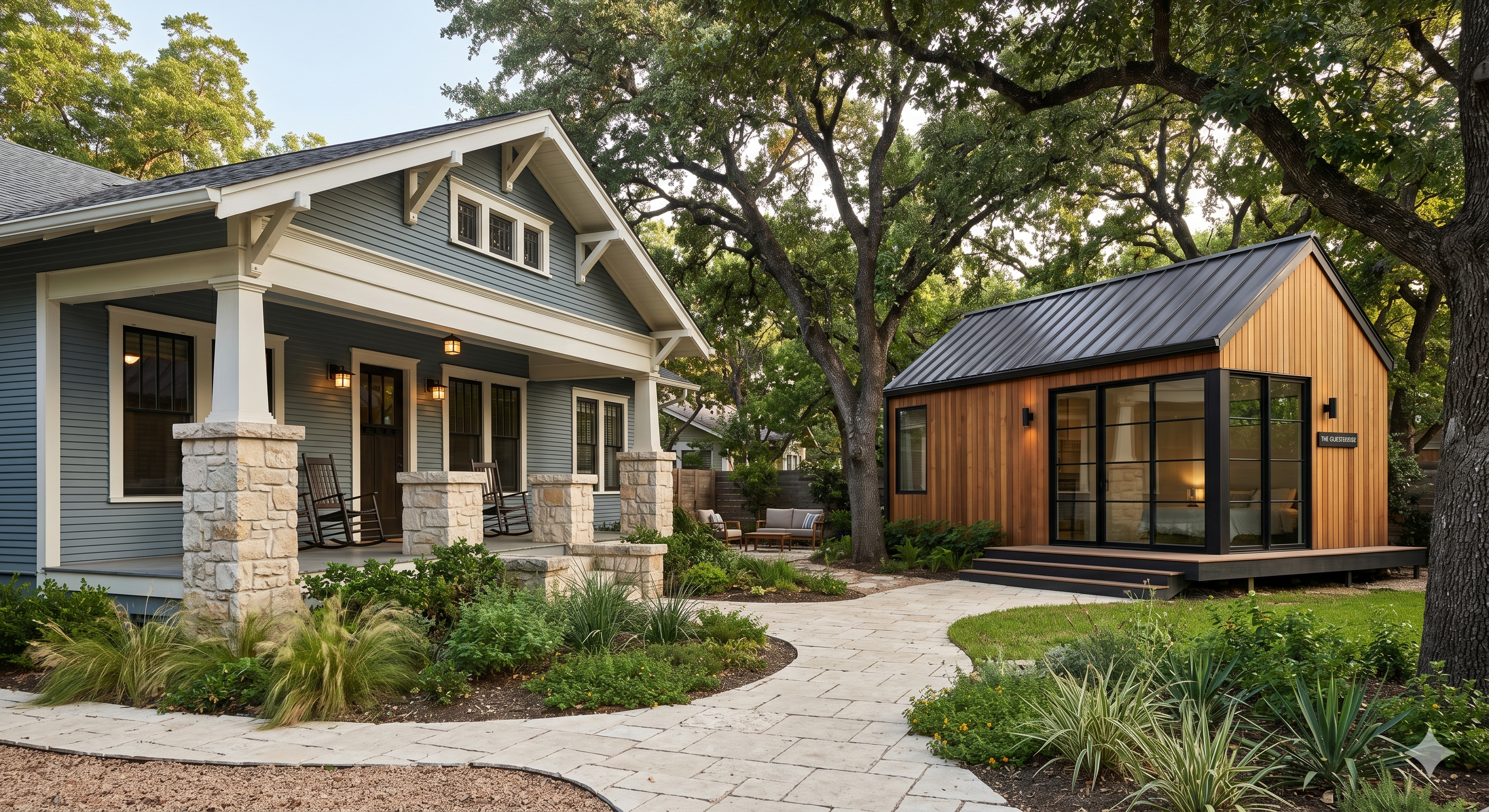
If you’re considering building a guest house, splitting a residential lot, or buying a property with development potential in Austin, Texas, here’s what you need to know: The City of Austin's HOME (Home Options for Middle-Income Equity) Act initiatives have fundamentally altered single-family zoning, slashing minimum lot sizes and making it vastly easier to build multiple units on a single lot. In Austin, these sweeping changes aim to tackle affordability by encouraging "gentle density" in traditionally restrictive residential areas. At Schmitz & Smith Group, we’re currently seeing a massive surge in savvy homeowners and buyers leveraging these updated 2026 land-use laws to maximize their property values, though navigating the neighborhood-specific restrictions remains highly nuanced.
Why This Matters in Austin Right Now
The rollout of the HOME Act (spanning Phase 1 and the more recent Phase 2 rollouts) marks the most significant overhaul to Austin’s Land Development Code in decades. For years, the city’s rigid regulations stifled housing supply, but the real estate landscape in 2026 looks entirely different.
- Drastic Lot Size Reductions: Under the latest rules, the minimum lot size for single-family homes in standard residential zones (like SF-2 and SF-3) has been reduced from 5,750 square feet down to 2,500 square feet or less. This opens the door for property owners to legally subdivide standard lots.
- Three Units Per Lot: Homeowners can now build up to three residential units on a single lot. This completely rewrites the rules for Accessory Dwelling Units (ADUs), tiny homes, and duplexes, allowing tiny houses to be treated as formal, permitted residential structures rather than temporary dwellings.
- The Development Clash: These changes have ignited a massive polarization in the local market. While high-density development is actively reshaping urban corridors, it has created a sharp divide between rapid-growth zones and strictly preserved historic pockets.
What Buyers and Sellers Should Consider
Before you purchase a property with the intent to develop, or before you list a home boasting "development potential," consider these critical 2026 legal and financial factors:
- HOA and Private Deed Restrictions Override City Code: This is the ultimate trap for buyers. Even if the City of Austin says you can build three units or split a lot under the HOME Act, private deed restrictions or neighborhood HOA bylaws override city code. If a neighborhood covenant bans multi-family structures or ADUs, the HOME Act cannot save you.
- Impervious Cover Limits Still Apply: While you are allowed more units, the city’s environmental protections and impervious cover limits (how much of the lot can be covered by buildings, concrete, or driveways—usually capped around 45% for single-family lots) remain strictly enforced.
- Infrastructure and Tree Protections: Austin's strict heritage tree ordinances (protecting trees with a trunk diameter of 19 inches or greater) still apply. A poorly placed oak tree can easily tank a backyard ADU build or a lot split.
- Financing Evolution: Appraising and financing a HOME Act property with multiple detached units or a tiny house is complex. Sellers who successfully permit these builds can command a premium, but buyers need specialized lenders familiar with local construction loans.
Neighborhood Spotlight: High-Density vs. Preserved Zones
East Austin (High-Density & Rapid Transformation)
- Price Range: $650,000 – $1.5M+
- Lifestyle Vibe: Vibrant, eclectic, fast-paced, and highly urban.
- Who it’s best for: Investors, builders, and buyers looking to build an ADU for rental income or multi-generational living.
- Local Detail: Because East Austin has fewer historic overlay protections and fewer strict HOAs, it has become ground zero for HOME Act lot splits, completely altering the architectural landscape with modern, multi-unit properties.
Pemberton Heights & Historic Hyde Park (Strictly Preserved Zones)
- Price Range: $1.2M – $4M+
- Lifestyle Vibe: Stately, prestigious, historic, and fiercely protected.
- Who it’s best for: Buyers prioritizing architectural preservation, massive estate lots, and long-term neighborhood stability.
- Local Detail: Despite city-wide code changes, historic zoning overlays and local neighborhood preservation funds in these areas make it incredibly difficult to alter the footprint of existing structures or subdivide historic parcels.
Related Reading
Maximize your local real estate knowledge with our deep-dive resources:
Are You an HOA or Non-HOA Buyer? Central Austin vs. The Suburbs: The Real Estate Trade-Off Austin Income Producing Properties Guide
Frequently Asked Questions About the Austin HOME Act
❓ Can I build a tiny house in my backyard in Austin? Yes. Under the provisions of the HOME Act, tiny houses on foundations can legally be classified as a second or third dwelling unit on a residential lot, provided the property complies with local utility connections, setback rules, and impervious cover limitations.
❓ What are Austin’s new minimum lot size rules? The city has dramatically reduced the minimum lot size required for single-family residential zoning down to 2,500 square feet (and in some specific cases, even smaller). This allows standard, larger urban lots to potentially be split into two distinct, salable parcels.
❓ Do the new zoning laws apply to Westlake or Dripping Springs? No. The HOME Act is an initiative passed strictly by the City of Austin for properties within Austin's municipal zoning jurisdiction. Independent municipalities like West Lake Hills or master-planned suburban areas in Dripping Springs operate under their own independent city councils or county regulations.
❓ How do I find out if my property has deed restrictions blocking the HOME Act? You must review the specific deed history and title policy for your home. Because the title search process requires an expert eye to ensure no hidden restrictive covenants exist, working with a highly technical real estate team is paramount.
If you're thinking about capitalizing on the HOME Act, splitting a lot, or exploring ADUs in Austin, we’d love to help you think strategically. The Schmitz & Smith Group works with buyers and sellers across Central Texas, including Hyde Park, Westlake, Barton Creek, Tarrytown, Dripping Springs, and beyond.
Reach out anytime to start the conversation. 512-466-5224
or another way