

Categories
Buying StrategyPublished October 26, 2026
Investing in an Austin STR in 2026

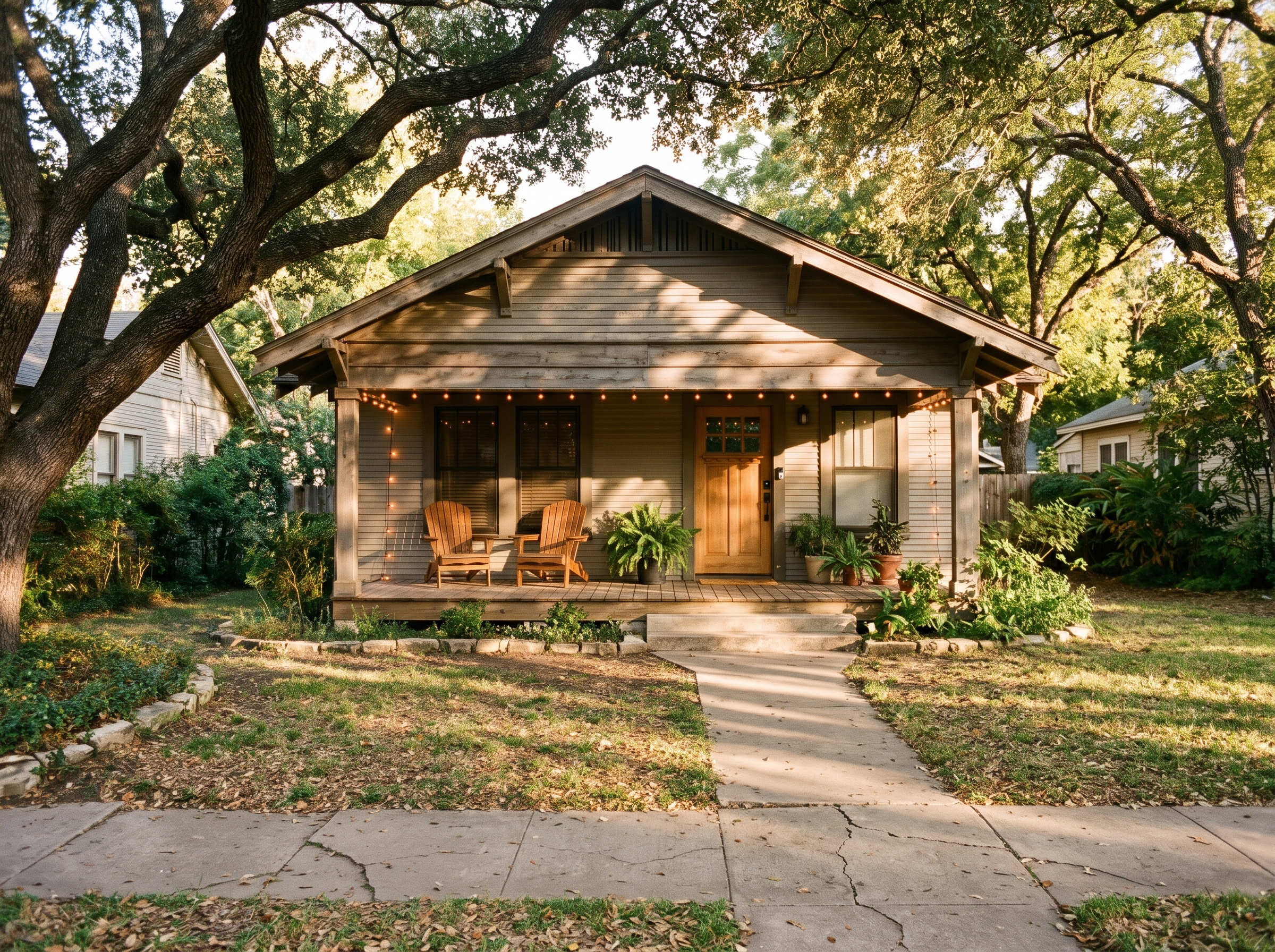
If you're thinking about buying an Airbnb in Austin, here's the short answer: it can still pay off in 2026, but only when the license, the HOA, and the math all line up before you buy. Not after.
Austin now requires a city license for every rental under 30 days, and since July 1, 2026, Airbnb and Vrbo have to pull any listing the city flags as unlicensed. The average Austin listing brought in about $41,400 over the last 12 months, according to AirDNA's August 2026 data. That sounds great until you see that nightly rates dropped 25% over the same year.
At Schmitz & Smith Group, the clients we see doing best with STRs usually didn't go shopping for one. They moved up to a bigger house, kept the old one, and licensed it. The house was already paid down, the neighborhood was already familiar, and the numbers didn't have to be heroic to work.
So this guide is less "how to get rich on Airbnb" and more "how to tell if this particular house will earn its keep."
Why This Matters in Austin Right Now
Austin spent most of the last decade with STR rules on the books and very little enforcement. That changed this year.
The rules got teeth. The city started scanning online listings in January 2026 and, by April 1, had flagged 2,785 unlicensed addresses. Active licenses climbed to about 2,750 by the end of March, up roughly 20% in a year. Then on July 1, the platforms had to start showing license numbers and removing listings the city reports. The city phases those delisting requests in batches, so expect a slow squeeze through 2027, not one dramatic purge.
Here's what the license looks like today:
|
Item |
What to know |
|---|---|
|
Who needs one |
Anyone renting all or part of a home for fewer than 30 nights |
|
Cost |
$836.30 for a new license |
|
How long it lasts |
2 years |
|
Transferable? |
No. A new owner applies from scratch, so budget for a few weeks with no bookings after closing |
|
Investor homes (Type 2) |
Allowed in every residential zone; up to 2 STRs on a site with 3 or fewer units |
|
More than one property |
Your own STR sites must sit at least 1,000 feet apart. Your neighbor's license doesn't block yours |
|
Taxes |
17% hotel occupancy tax (6% state, 11% city). Airbnb and Vrbo collect it for you; direct bookings are on you |
The revenue picture got murky. Ask three data companies how Austin STRs perform and you'll get three answers. AirDNA puts the average at $41,400 a year, 58% occupancy, and a $215 nightly rate. Rabbu says $28,148 and 38% occupancy. That gap tells you something important: market averages won't underwrite your deal. Comps for your specific house, bedroom count, and block will.
AirDNA also shows the active listing count down almost 26% from a year ago and nightly rates down 25%. Fewer competitors is good news. Lower rates are not. Enforcement should keep thinning out unlicensed listings, but I wouldn't bake a supply shortage into your projections.
The buying side favors you right now. Across the Austin metro, the median sale price sits at $367,500 year to date, homes take a median of 51 days to sell (7 days longer than last year), and buyers pay about 1.9% under asking. With 5.4 months of supply, the market sits squarely in balanced territory. Translation: you can negotiate, ask for repairs, and take the time to verify the numbers. Nobody needs to waive everything in 24 hours to win a house this fall.
What Buyers Should Consider Before Making an Offer
I attend every inspection with my clients, and with an STR, the inspection only covers half the homework. Here's the other half.
- Check the HOA and deed restrictions first. The city allows STRs in every residential zone. Your HOA or a 1950s deed restriction may not. This kills more Austin STR deals than the city ever does, so read the CC&Rs before you fall in love with the kitchen.
- Ask when the guest house was built. Austin limits ADUs approved after October 1, 2015 to 30 nights of short term rental a year. A newer backyard cottage makes a great long term rental. It won't carry an Airbnb business.
- Run the numbers on net, not gross. Cleaning, supplies, utilities, platform fees, insurance, and repairs typically eat 35% to 50% of gross revenue. Add 20% to 30% more if you hire a manager.
- Budget for setup. Furnishing a 2 bedroom from scratch runs about $15,000 to $25,000. Spend real money on mattresses and photos. Guests review the bed, not your throw pillows.
- Plan for a local contact. The city requires someone in the Austin area who responds to complaints within 2 hours. If you travel a lot, that means a co-host or manager.
- Get STR insurance. Standard homeowners policies don't cover a business. Dedicated STR policies run roughly $2,000 to $4,000 a year.
- Line up the right loan. Most investors use a DSCR loan, which qualifies you on the property's projected income instead of your paycheck. Expect 20% to 25% down. If you plan to keep your current home and rent it out, talk to your lender before you list anything.
- Ask your CPA about the STR tax rules. When the average guest stays 7 nights or fewer and you put in the hours yourself, losses from the property may offset your W-2 income. That can change the whole investment case, and it requires careful records. I'm not a tax advisor, so loop in a CPA who works with real estate investors early.
- Keep a Plan B. If the STR math feels thin, a furnished rental of 30 nights or more needs no STR license. Traveling nurses, visiting professors, and families mid relocation book those stays all year, and the work runs a lot lighter.
Neighborhood Spotlight
The best STR neighborhoods give guests something to walk to and a reason to come back. ACL weekend pays like a rock star. A random Tuesday in January pays like a substitute teacher. You want a location that earns on both.
East Austin (Holly, East Cesar Chavez, Central East Austin)
- Price range: Single-family homes in 78702 sold from about $320,000 to $2.8 million over the past year, with a median around $730,000.
- Vibe: Food trucks, cocktail bars, murals, and a short ride to downtown.
- Best for: Buyers who want year-round demand from both tourists and weekday business travelers.
- Local detail: GuestFavorites puts Central East Austin listings at about $60,900 a year, with a $304 average nightly rate and 55% occupancy for the first half of 2026. That beats the citywide average comfortably. And with roughly 9 months of supply in 78702, buyers here have real room to negotiate.
Travis Heights and Bouldin Creek
- Price range: Expect to start near $900,000. The median sale runs about $956,000 in Travis Heights and $1.17 million in Bouldin Creek, and the 78704 single-family median sits around $1.16 million.
- Vibe: Leafy streets and older homes a few blocks from South Congress.
- Best for: Couples and small groups who want to walk to dinner, then sleep somewhere quiet.
- Local detail: Guests here pay for the walk to SoCo and Lady Bird Lake, so a 2 or 3 bedroom near the hike-and-bike trail tends to hold its rate even outside festival season. At these prices, though, the STR math only works if you already own the house or bring a big down payment.
Hyde Park and North Loop
- Price range: Single-family homes in 78751 sold from about $450,000 to $1.65 million over the past year. The ZIP's median sits around $710,000, and Hyde Park proper runs closer to $830,000.
- Vibe: Bungalows, coffee shops, and the best people watching on Duval.
- Best for: Owners who want steady UT traffic: football weekends, graduation, campus visits, and visiting faculty.
- Local detail: This area also works beautifully for 30-night furnished stays, which gives you a fallback if you ever decide to step away from nightly rentals.
Related Reading
- The Real Monthly Cost of Owning a Home in Austin in 2026 (It's Not the Mortgage)
- The Central Austin Dilemma: Historic Charm vs. the Hidden Money Pit
- Three Lost Bidding Wars and One Hyde Park Win: Buying in Austin's "Balanced" Market
- Assuming a VA Loan in Austin: The Move Almost Nobody's Talking About
Frequently Asked Questions About Investing in an Austin STR
Is now a good time to buy a short term rental in Austin? It's a good time to buy, and a careful time to buy an STR. Sellers will negotiate right now, with homes sitting a median of 51 days and selling about 2% under asking. But nightly rates fell about 25% this year, so the deal has to work at today's rates, not 2022's.
Do I need a license to run an Airbnb in Austin? Yes. Any rental under 30 nights needs a city STR license, which costs $836.30 and lasts 2 years. Since July 1, 2026, Airbnb and Vrbo must remove listings the city flags as unlicensed.
Which Austin neighborhoods work best for STRs? East Austin, Travis Heights, and Bouldin Creek tend to earn the most because guests can walk to food, music, and the lake. Hyde Park and North Loop draw steady UT traffic and make a strong fallback for 30 night furnished rentals.
How much should I budget beyond the purchase price? Plan on $15,000 to $25,000 to furnish and launch a 2 bedroom, plus the $836.30 license, $2,000 to $4,000 a year for STR insurance, and 35% to 50% of gross revenue for ongoing costs. Most STR loans require 20% to 25% down.
What mistakes should STR buyers avoid? Skipping the HOA and deed restriction check, buying a post 2015 ADU and expecting full time bookings, and trusting a seller's revenue claims without verifying them. Also, licenses don't transfer, so a seller's license won't help you after closing.
Ready to Talk It Through?
If you're thinking about an STR in Austin, I'd love to help you think strategically: run the comps, read the fine print, and figure out whether this house earns its keep.
The Schmitz & Smith Group works with buyers and sellers across Central Texas, including Hyde Park, Westlake, Barton Creek, Tarrytown, Dripping Springs, and beyond.
Reach out anytime to start the conversation. 512-466-5224
or another way