

Categories
Buying StrategyPublished October 30, 2026
Cost Segregation for Austin Rental Owners: When It Pays and What It Costs You Later (2026 Guide)

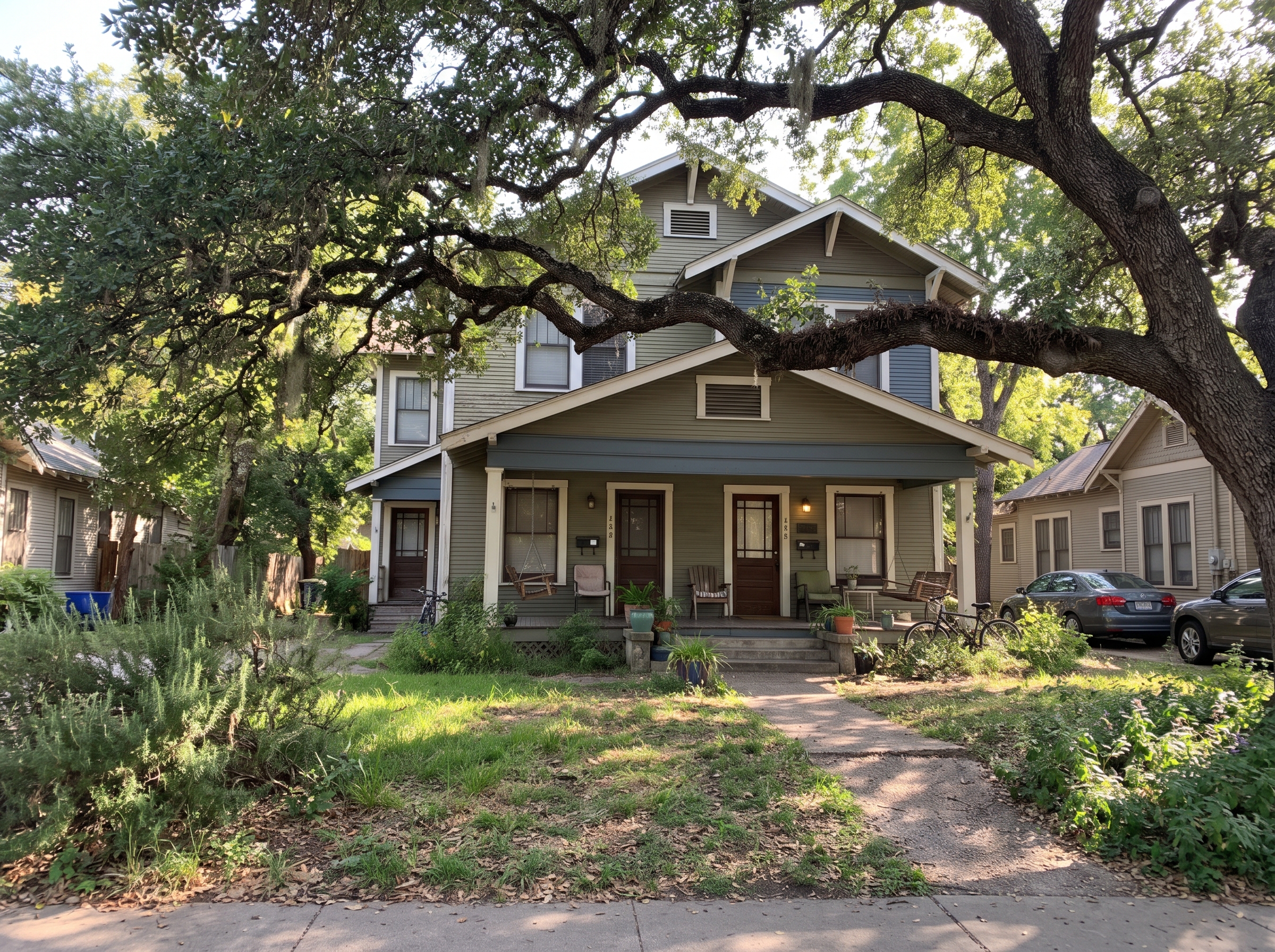
If you own a rental property in Austin, here's what you need to know: a cost segregation study can turn years of future depreciation into one big deduction this year. Since July 2025, federal law lets you write off 100% of qualifying components in year one, and that rule now applies permanently to property bought after January 19, 2025. The catch comes at sale, when the IRS taxes some of that deduction back at rates up to 37%. Texas has no state income tax, so Austin owners get the full federal benefit with no state rules to untangle. At Schmitz & Smith Group, we see more Central Austin duplex and fourplex buyers asking about cost seg before they close, and the smart ones ask about their exit plan in the same breath.
What Is Cost Segregation?
Cost segregation splits your property into parts that wear out at different speeds, so you can deduct the fast ones sooner.
Normally the IRS treats a residential rental as one asset that depreciates evenly over 27.5 years. But your rental isn't one thing. It's a roof and walls, sure, but it's also appliances, carpet, cabinets, light fixtures, a fence, a driveway, and landscaping. A cost segregation study, usually done by an engineering or specialty tax firm, identifies those pieces and moves them into shorter categories:
- 5 and 7 years: appliances, carpet, window treatments, some cabinetry and fixtures
- 15 years: fencing, sidewalks, driveways, landscaping, outdoor lighting
- 27.5 years: everything else in the building
With 100% bonus depreciation back, you can deduct the full cost of those 5, 7, and 15 year items in the year you place the property in service. On a typical residential rental, studies move roughly 20% to 35% of the building cost into these faster categories. Land never depreciates, so it stays out of the math entirely.
Why This Matters in Austin Right Now
Austin prices have flattened, so appreciation alone won't carry most rental returns. Tax strategy now does more of the heavy lifting.
Here's where the Austin metro stands year to date (UnlockMLS, Austin MSA, all property types):
|
Metric |
Year to date |
Change |
|---|---|---|
|
Median sale price |
$367,500 |
down 0.7% |
|
Average price per sq ft |
$218 |
down 4.4% |
|
Median days on market |
51 |
up 7 days |
|
Sale price vs. asking |
1.9% under |
flat |
|
Months of supply |
5.4 |
balanced |
Two things stand out for investors. First, buyers have room to negotiate again, which makes it easier to buy a rental that pencils. Second, with prices drifting sideways, a large first year deduction can make the difference between a rental that feels like a burden and one that pays you back.
One Austin wrinkle: land. In Central Austin neighborhoods, land often makes up a big share of what you pay, and land doesn't depreciate. Pull the Travis Central Appraisal District split between land and improvements before you assume a study will pay off. A $900K Hyde Park duplex with $550K of land value gives you far less to work with than the price suggests.
We also see a lot of move-up buyers keeping their current home as a rental instead of selling. If that's you, a study on the home you already own may still work through a look-back study, covered below.
When Cost Segregation Makes Sense (and When It Doesn't)
Cost seg pays off when you can use the deduction now, plan to hold for years, and have enough building value to justify the fee. Miss any one of those and it can cost you more than it saves.
Good candidates:
- You can use the losses. Rental losses count as passive, so they usually only offset other passive income. They can offset your W-2 or business income if you qualify as a real estate professional (750+ hours a year and more than half your working time in real estate), or if you run a short-term rental with an average guest stay of 7 days or less and you materially participate. If you're under $100K of modified adjusted gross income, you may also deduct up to $25K of rental losses, phasing out by $150K.
- You're in a high bracket this year. A deduction at 35% or 37% today beats one at 22% later.
- You plan to hold 5+ years. The longer you hold, the longer you enjoy the tax deferral before any payback.
- The building has real value. Most firms suggest a depreciable building basis of at least $300K to $500K to justify a professional study, which typically runs a few thousand dollars for a residential property.
Skip it or wait if:
- You'll sell within 2 to 3 years. You'll pay back much of the benefit almost immediately.
- You can't use the losses. Suspended passive losses just sit there until you sell, and you've paid for a study that did nothing for you in the meantime.
- Your income will jump soon. If you expect a much higher bracket in a few years, waiting can make the deduction worth more.
- Land eats most of your price. Common in Central Austin. Check the appraisal district split first.
Timing: The cleanest time is the tax year you buy and rent the property. Missed it? A look-back study lets you catch up missed accelerated depreciation in a single year by filing IRS Form 3115, without amending old returns. If the rental used to be your home, whether bonus depreciation applies gets complicated, so loop in your CPA before ordering a study.
How Depreciation Recapture Works When You Sell
Cost segregation doesn't erase taxes. It moves them. When you sell at a gain, the IRS takes back the depreciation you claimed, and the cost seg portion usually comes back at your ordinary income rate.
Your gain splits into three buckets:
|
Bucket |
What's in it |
Federal rate |
|---|---|---|
|
Cost seg components |
Depreciation on 5 and 7 year items (and accelerated depreciation on 15 year items) |
Ordinary income, up to 37% |
|
Regular building depreciation |
Straight line depreciation on the 27.5 year portion |
Up to 25% |
|
Appreciation |
Everything above your original price |
15% or 20% long term capital gains |
Higher earners may also owe the 3.8% net investment income tax on top. And skipping depreciation won't save you. The IRS taxes the depreciation you were entitled to take, whether you took it or not.
A quick example. You buy a $800K rental: $200K land, $600K building. A study moves $150K into short-life categories, and you deduct all of it in year one. The other $450K depreciates at about $16,400 a year. Five years later you sell for $1M (ignoring closing costs).
|
|
Amount |
Taxed at |
|---|---|---|
|
Cost seg depreciation |
$150,000 |
Up to 37% |
|
Building depreciation, 5 years |
$82,000 |
Up to 25% |
|
Appreciation |
$200,000 |
15% to 20% |
|
Total gain |
$432,000 |
|
Without the study, most of that $150K would sit in the 25% bucket, and you'd still have most of it left to deduct.
So why do it? You took a $150K deduction years before you paid anything back. That's an interest-free loan from the IRS. If you deducted at 35% and pay back at a lower blended rate, you also come out ahead on the rate.
Ways to shrink or avoid recapture:
- Price the components honestly at sale. Recapture on each component can't exceed the gain on that component. Five-year-old carpet and appliances don't hold much value. A supported, realistic value for them at sale, ideally backed by your cost seg firm, keeps more of your gain in the lower rate buckets.
- Do a 1031 exchange. You roll the gain into another investment property and defer the tax. One catch: if the new property doesn't have enough short-life components of its own, some recapture can still come due. A study on the replacement property helps.
- Hold until death. Your heirs get a stepped-up basis, and the recapture goes away.
- Buy and cost seg another property the year you sell. New deductions can offset the recapture.
- Don't count on an installment sale. Seller financing spreads out capital gains, but all recapture comes due in the year of sale.
Neighborhood Spotlight: Central Austin Rentals
Hyde Park. Duplexes and garage apartments on tree-lined streets a short bike ride from UT. Best for investors who want steady tenants and long-term appreciation. Land value runs high here, so check the improvement value before you budget for a study.
North Loop. Older bungalows, duplexes, and backyard units near the shops and coffee spots along North Loop Boulevard. Best for buyers who want a mix of rental income and walkability. Updated units with newer kitchens and systems give a study more to work with.
Crestview. Mid-century homes on bigger lots, with easy access to the Lamar and Airport rail stop. Best for move-up buyers keeping their first home as a rental. Austin's HOME code changes allow up to three units on many single-family lots, so some owners add a unit and create a brand new depreciable asset.
Frequently Asked Questions About Cost Segregation in Austin
Is now a good time to do a cost segregation study on an Austin rental? For property bought after January 19, 2025, yes, if you can use the losses. You can deduct 100% of the qualifying components in year one, and Texas adds no state income tax wrinkle. Older rentals can still catch up through a look-back study.
How much does a cost segregation study cost? Professional studies on residential rentals typically run a few thousand dollars, with lower-cost options for smaller single-family homes. Ask for a free estimate of the deduction first. If the projected tax savings don't beat the fee several times over, pass.
What price range makes a study worth it in Austin? Focus on the building value, not the sale price. A depreciable building basis of roughly $300K to $500K or more usually justifies a professional study. In Central Austin, a $900K property can fall short of that once you subtract land.
Will I owe more tax when I sell? Usually, yes. The cost seg portion of your depreciation comes back as ordinary income at up to 37%, versus 25% for regular building depreciation. A 1031 exchange, holding until death, or offsetting with new deductions can reduce or defer that bill.
What mistakes should investors avoid? Ordering a study when passive loss rules will block the deduction. Ordering one on a property you'll flip in two years. And forgetting to plan the exit, since the recapture bill shows up on your tax return the year you sell, whether you planned for it or not.
Thinking About a Rental in Austin?
If you're weighing cost segregation on an Austin rental, we'd love to help you think it through, starting with the right property. Schmitz & Smith Group works with buyers, sellers, and investors across Central Texas, including Hyde Park, Westlake, Barton Creek, Tarrytown, Dripping Springs, and beyond. We'll pull the numbers, connect you with tax pros we trust, and help you buy with your exit in mind.
Reach out anytime to start the conversation: 512-466-5224.
This post shares general information, not tax or legal advice. Talk with your CPA about your specific situation before ordering a study or selling a property.
Sources: Baselane, Cost Segregation and Bonus Depreciation 2026 Guide · Cost Seg, Depreciation Recapture · Engineered Tax Services on 100% bonus depreciation · Austin MSA market data: UnlockMLS, year to date
or another way