

Categories
Buying StrategyPublished February 2, 2026
Austin income-producing properties: what to buy, what they cost, and how to choose

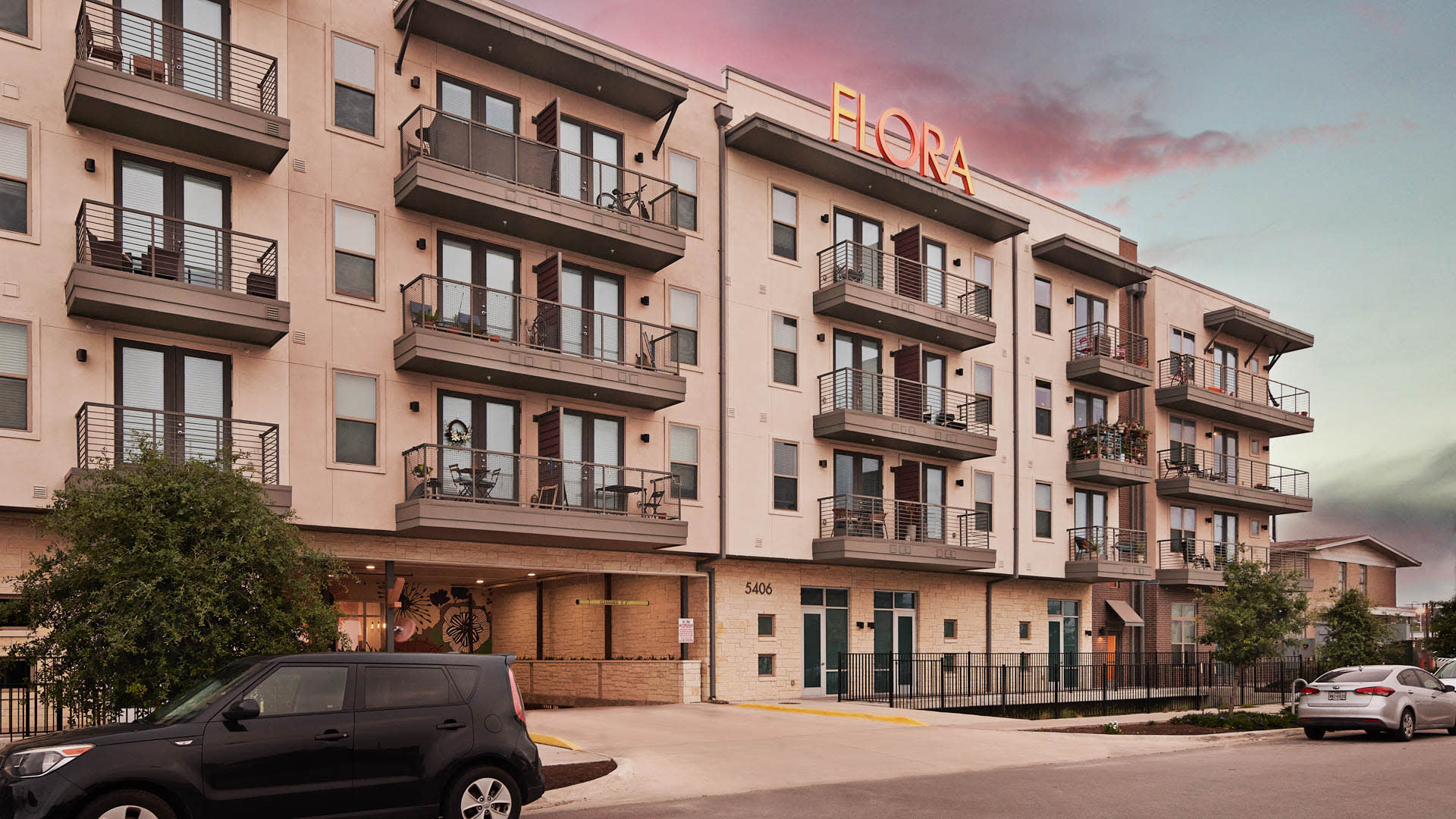
If you’re looking for an income-producing property in Austin, you’ll quickly notice there isn’t one “best” option—there are tradeoffs between price point, complexity, financing, tenant demand, maintenance, and how hands-on you want to be.
At Schmitz & Smith, we typically see three evergreen categories win in the Austin area:
- Duplexes / triplexes / fourplexes (2–4 units)
- Small apartment buildings (5+ units)
- Single-family homes with an ADU (Accessory Dwelling Unit)
Below is a practical guide to each—plus the pros/cons and the “what do these cost?” question everyone asks.
A quick pricing snapshot for context
- The overall “multi-family homes” category in Austin has shown a median listing price around the mid-$500Ks (example: $585K on one recent market snapshot).
- Central Austin has shown a median listing price around ~$700K for multi-family listings (duplex/triplex/etc. vary widely by street and condition).
- For larger multifamily (apartment assets), recent brokerage market reports have shown cap rates in the mid-5% range and pricing often discussed per unit (e.g., “$224K per unit” in one quarter).
Important note: “Price point” in Austin is extremely neighborhood- and condition-dependent. Newer builds, fully remodeled units, or anything with STR flexibility will sit at the higher end.
1) Duplexes (and other 2–4 unit properties)
What it is
A single property with 2–4 separate units, each with its own kitchen/bath and (usually) separate entrances.
Common Austin price bands (very general)
- Entry to mid range: often around the $500K–$750K band in some pockets, depending on condition and location.
- Central + “prime” neighborhoods / remodeled / newer builds: frequently higher, with Central Austin multi-family medians hovering closer to ~$700K on some snapshots.
Why buyers love duplexes
- Financing can be friendlier than larger apartments (and owner-occupant options may exist for 2–4 units).
- Tenant demand can be strong—especially for “missing middle” housing near job centers, campuses, and walkable areas.
- Easier operations than a 10–20 unit building (fewer systems, fewer leases, fewer moving parts).
The downsides
- Property taxes + insurance can feel heavy if the rents don’t match the purchase price.
- Deferred maintenance is common in older 2–4 unit stock (plumbing, electrical, foundation, roofs).
- Unit mix matters (two 1/1s vs. two 2/1s can change your tenant pool and rent resilience).
Best for you if…
You want income property exposure, but you still want conventional-style financing and a relatively manageable landlord experience.
2) Small apartment buildings (5–20ish units)
What it is
A true multifamily building—often 5+ units—that’s valued more like a business.
Common Austin price bands (rule-of-thumb math)
Many deals are discussed per unit. For example, one recent market report cited pricing around $224,000 per unit (quarter-specific, deal-specific).
So very roughly:
- 5-unit: could land around ~$1.1M+ (5 × $224K), before location/condition/quality premiums
- 10-unit: ~$2.2M+
- 20-unit: ~$4.5M+
And cap rates cited in recent Austin multifamily reporting have been around the mid-5% range, with market conditions (vacancy, rent growth) shifting quarter to quarter.
Why investors buy small apartments
- Economies of scale: one roof, one property, multiple income streams.
- Professional underwriting: you can often “force appreciation” through renovations + rent increases (value-add).
- More predictable operations once stabilized (especially with professional management).
The downsides
- Financing is different (typically more documentation, stronger reserves, and underwriting tied to property performance).
- More operational intensity: turnovers, maintenance tickets, compliance, and tenant management scale up fast.
- Market cycles matter: vacancy and rent growth can swing in Austin (which impacts returns).
Best for you if…
You’re aiming for a true investment property that you treat like a business—and you’re comfortable with more complexity (or you plan to hire strong property management).
3) Single-family homes with an ADU (house + “second unit”)
What it is
A primary home plus an Additional Dwelling Unit (garage apartment, backyard cottage, etc.).
On the rules side: the City of Austin defines ADUs and regulates them through its Land Development Code, and recent “HOME” code amendments were designed to allow more housing types and increase supply.
Common Austin price bands (how this usually plays out)
You’re often paying for:
- the base single-family home value plus
- the “income/unit premium” (existing ADU) or
- the future upside if you can build one
In practice, ADU properties can show up across a broad spectrum—from modest East/South Austin lots to higher-end central neighborhoods—so pricing is less “one band” and more “depends on land + location + build quality + legal status.”
Why buyers love ADUs
- Flexibility: rent the ADU, rent the main house, do mid-term rentals, host family, use it as an office—lots of strategies.
- Often better tenant appeal: ADUs can feel “homey” vs. apartment living.
- Exit options: you’re still holding something that resembles a normal single-family home (bigger resale buyer pool).
The downsides
- Permitting + compliance risk: you want to confirm the ADU is legal/permitted (or understand the path to legalize/build).
- Utility and addressing complexity: meters, parking, access, trash—small details create real friction.
- Construction costs can be unpredictable if you’re planning to add an ADU after purchase.
Best for you if…
You want a hybrid: lifestyle + investment. ADUs are great for “I want help with the mortgage” or “I want future flexibility” buyers.
How to choose the right property type for your goals
Here are the three questions we ask clients first:
- Do you want simplicity or scale?
- Simplicity → duplex / ADU
- Scale → small apartment
- Do you want conventional-style financing?
- Often easier: duplex / ADU
- More commercial: 5+ units
- What’s your tolerance for operational intensity?
- Lower: ADU (if it’s straightforward)
- Medium: duplex
- Higher: small apartment buildings
What Schmitz & Smith does differently for investor buyers
We don’t just send you listings. We help you underwrite the deal like an investor:
- rent comps + realistic vacancy assumptions
- repair/CapEx planning (what will break, and when)
- neighborhood-by-neighborhood strategy (tenant demand, school zones, commute patterns)
- financing paths (including investor loans when appropriate)
If you tell us your budget, ideal neighborhoods (or commute radius), and whether you want “hands-off” or “value-add,” we can narrow the field fast—and help you avoid the properties that look great online but don’t pencil out in real life.
Frequently Asked Questions
❓What type of income-producing property performs best in Austin long term?
There isn’t a single “best” option—performance depends on your goals. Duplexes and ADUs tend to perform well for investors prioritizing flexibility and conventional financing, while small apartment buildings often outperform over time for buyers focused on scale and forced appreciation. The strongest outcomes come from aligning property type with risk tolerance, capital reserves, and management style.
❓Are income-producing properties in Austin still cash-flow positive?
They can be, but assumptions matter. Many Austin deals today are thinner on day-one cash flow and stronger on long-term appreciation, rent growth, or tax strategy. Properties that truly cash flow often require realistic underwriting, value-add strategies, or longer hold periods rather than turnkey expectations.
❓How important is neighborhood selection for rental performance?
Extremely important. Tenant demand, rent resilience, vacancy risk, and exit value vary dramatically by neighborhood—even street by street. Proximity to job centers, schools, transit, and lifestyle amenities often matters more than unit count alone.
❓Should first-time investors start with a duplex, ADU, or small apartment?
Most first-time Austin investors are best served by duplexes or ADU properties. They offer easier financing, lower operational complexity, and more flexibility if your strategy evolves. Small apartment buildings are better suited for buyers who are prepared to treat the property as a business from day one.
or another way